If you’ve ever sat across from a little one who could rattle off every letter sound but still can’t read the word cat, you know exactly why teaching CVC words is more than just pointing to letters. There’s a progression, a specific sequence of skills that makes all the difference between a child who guesses and a child who actually blends.
During these last few years of teaching primary, I’ve been trying to focus more on the progression (both in literacy and numeracy) than on the activities. We are starting to see a better understanding of thinking about words and reading is improving.
Before CVC: The Foundation Has to Be There First
Here’s what I’ve learned: rushing into CVC words before students are ready doesn’t save time — it costs time. Before blending consonant-vowel-consonant words, students should have a couple skills in place. I have talked about this in the posts: Before you teach Spelling and Before you teach Sight Words.
Phonemic awareness — and I mean oral, no letters yet. Can your students hear that cat has three sounds? Can they clap them, tap them, say them slowly? If not, start there. This is the soil the whole reading garden grows in. Hearing all the sounds is huge. Note: sometimes you will experience a child with actual hearing problems. I check with the parents at the beginning of the year to see when a child has had a hearing and eye test done.
Letter-sound fluency — not just recognition, but automaticity. When a student has to stop and think hard about what sound the letter m makes, blending is going to feel impossible. We want those sounds to come quickly and easily before we ask students to hold them all together. One hack we use in the classroom is “Mnemonic Letter Cards” from OnLit. This 40 minute Youtube video shares the research behind mnemonic cards AND there is a link to FREE cards that you can print!
I also spend time on beginning, middle, and end sound work before formal CVC instruction begins. Isolating sounds in each position, “What’s the first sound in sun? What’s the last?” This builds the phonemic muscle students need when it’s time to blend all three. Segmenting words into sounds can take a while but it pays off in the long run.
The CVC Progression: How I Sequence It
Once students are ready, here’s the order I try to follow:
1. Start with continuous sounds. Words like map, sat, and sun are easier to blend because you can stretch and hold those first sounds: mmmmm… ma… mat. This is called cumulative blending, and it’s a game-changer for beginners. I often send home a sheet of two-letter, nonsense words to practice.
2. Introduce vowels one at a time. I start with short a and spend a full week there — reading it, building it, playing with it — before moving on. My sequence is a → e → i → o → u, though some teachers save e for last since it tends to be the trickiest. Trust your knowledge of your class. You can even spend an extra with working with just the ‘e’ and ‘i’ vowel as students struggle between the two (especially ELL students).
3. Word building and manipulation. Once students can read CVC words, we start playing with them. Change cat to mat to man — and watch the lightbulbs go on. Magnetic letters, whiteboards, and Play-Doh are your best friends here.
4. Move into decodable text. Reading isolated words is one thing; reading them in sentences is another. As students gain confidence, begin moving them into short decodable sentences and books that let them practice in context.
What a Mini-Lesson Looks Like
Lessons for teaching CVC words need to be short and focused — no longer than 30 minutes, often less. Here’s a simple structure that works:
- Warm up (5 min): Oral phonemic awareness — no letters yet. Say a word, students tap the sounds.
- Letter-sound review (5 min): Flash the vowel card, echo the sound, practice 3–4 words.
- Model blending (5 min): Cumulative blending on the board. Think aloud as you go.
- Guided practice (10 min): A hands-on activity — Roll & Read, a word sort, or building words together.
- Wrap up (5 min): Quick segmenting check. A few students share. Preview what’s coming next.
Simple, focused, and repeatable. That’s the goal.
🎉 Want to see this in action? I’ve put together a free sample lesson plan — already filled in for Short a — so you can see exactly how this mini-lesson structure looks on paper. [Click here to grab your free sample lesson plan! — link] If you like this lesson plan template, I have a freebie available on TPT. It is an editable Word Doc.
A Note for New Teachers
If you’re in your first few years, here’s the most important thing I can tell you: the progression matters more than the activities. Any game, worksheet, or resource is only as effective as the sequence it’s used in. Know where your students are, meet them there, and move forward one step at a time. Teaching CVC words is actually a very enjoyable and insightful activity for you and your students.
And give yourself permission to slow down on a vowel if students need it. A week on short a can become ten days. That’s not falling behind — that’s good teaching.
Ready-Made Resources to Support Your CVC Instruction
If you’re looking for activities that follow this exact progression, my CVC Activities Pack is now available in my Teachers Pay Teachers store!
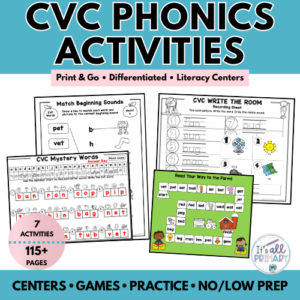
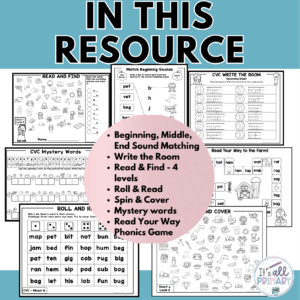
This resource was built with the sequence in mind — from beginning, middle, and end sound warm-ups all the way through to mixed CVC practice. Here’s what’s inside:
- Beginning, Middle & End Worksheets — perfect for building readiness before CVC blending begins
- Roll & Read and Read & Find boards — one per vowel plus a mixed set, ideal for small groups and centres
- Spin & Color — low prep, self-correcting independent practice
- Mystery CVC Words — a whole-group favourite that builds anticipation and phonemic engagement
- Write the Room — with both colour and black & white versions, and with or without text support for easy differentiation
- Read Your Way to the Farm game boards — one per vowel plus mixed, great for partners or centres
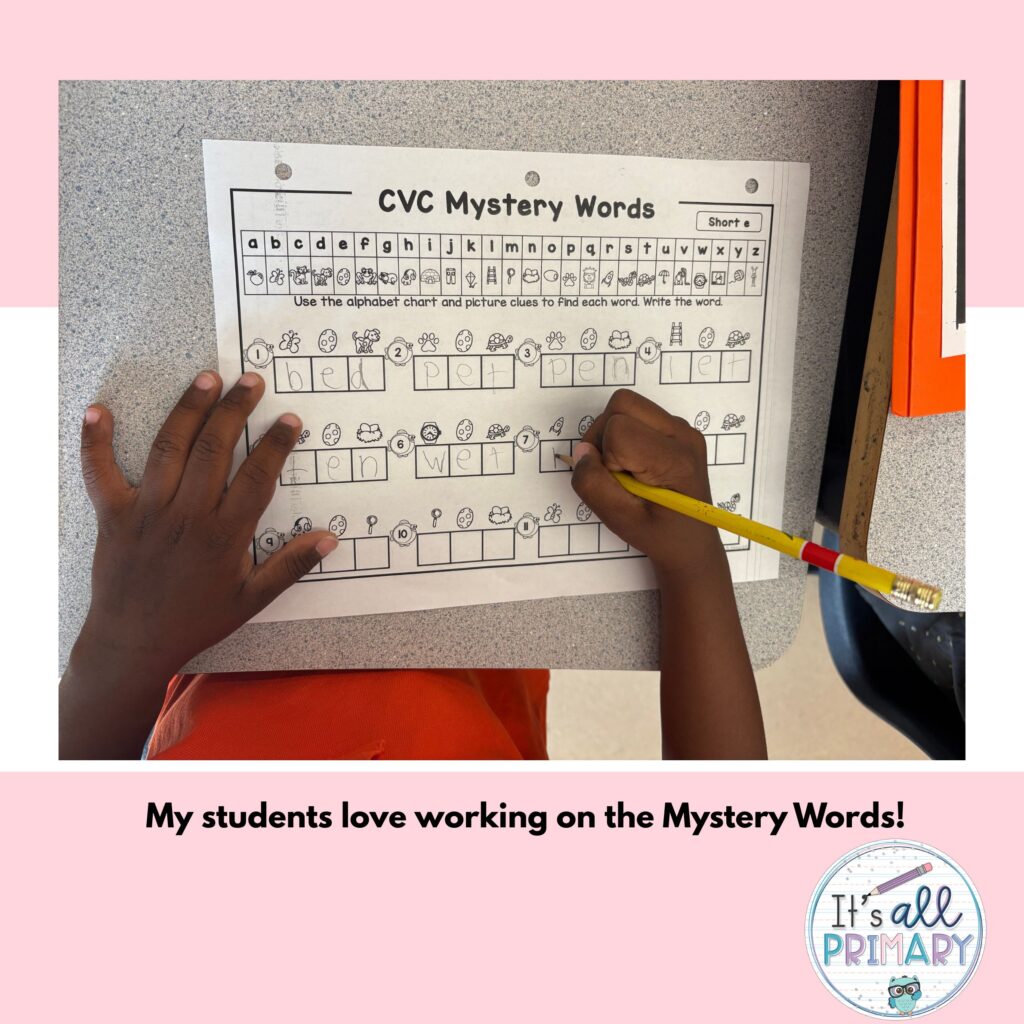
Everything is organized by vowel so you can teach one sound at a time, just like the progression calls for. A “How I Use” guide is included so you know exactly where each activity fits.
👉 [Find it in my TPT store here]
Have a question about teaching CVC words or how you sequence it in your classroom? Drop it in the comments — I’d love to hear how other primary teachers approach this!
Happy Teaching!
Lori-Anne

Leave a Reply
You must be logged in to post a comment.